inquiry
Eine Nachricht hinterlassen
Wenn Sie an unseren Produkten interessiert sind und weitere Details wissen möchten, hinterlassen Sie hier eine Nachricht, wir werden Ihnen so schnell wie möglich antworten.
EINREICHEN
Bengbu Longkai Schweißschutztechnologie Co., Ltd.
HEIM

PAPR-Atemschutzmaske

PAPR-Atemschutzmaske

  • Demolition Work: Choosing the Right PAPR
    Demolition Work: Choosing the Right PAPR
    Jan 20, 2026
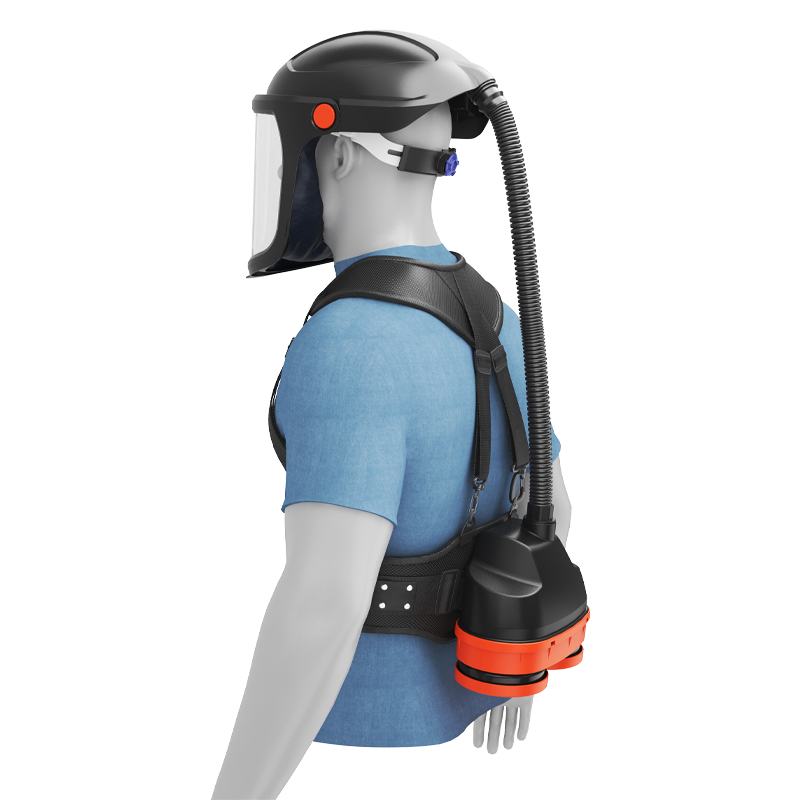
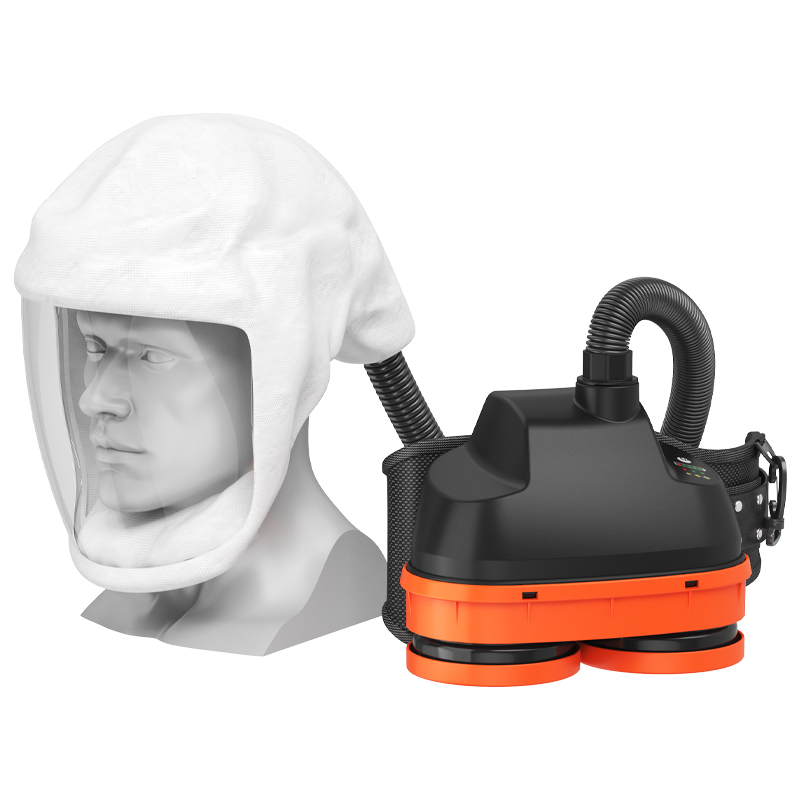
      Demolition work involves complex and variable environments. From breaking down walls of old buildings to dismantling industrial facilities, pollutants such as dust, harmful gases, and volatile organic compounds (VOCs) are pervasive, placing extremely high demands on respiratory protection for workers. battery powered respirator have become core protective equipment in demolition work due to their advantages of positive pressure protection and low breathing load. However, not all PAPRs are suitable for all scenarios; selecting the right type is essential to build a solid line of defense for respiratory safety. Compared with traditional negative-pressure respirators, PAPRs actively deliver air through an electric fan, which not only reduces breathing fatigue during high-intensity operations but also prevents pollutant leakage through the positive pressure environment inside the mask, significantly improving protection reliability.   For general dust-generating demolition operations, particulate-filtering PAPRs are preferred. Such operations commonly involve the demolition of concrete, masonry, wood, and other components, with respirable dust—especially PM2.5 fine particles—as the primary pollutant. Long-term inhalation can easily induce pneumoconiosis. When selecting a model, high-efficiency particulate filters should be used, and the mask can be chosen based on operational flexibility needs. For open-air scenarios such as ordinary wall breaking and floor demolition, air-fed hood-type PAPRs are more suitable. They do not require a facial fit test, offer strong adaptability, and can also provide head impact protection. For narrow workspaces with extremely high dust concentrations, it is recommended to use tight-fitting full-face PAPRs, which have a minimum air flow rate of no less than 95L/min, forming a tight seal on the face to prevent dust from seeping through gaps.   For demolition operations involving harmful gases, combined-filtering PAPRs are required. During the demolition of old buildings, volatile organic compounds such as formaldehyde and benzene are emitted from paints and coatings, while the dismantling of industrial facilities may leave toxic gases such as ammonia and chlorine. In such cases, a single particulate-filtering PAPR cannot meet protection needs. Dual-filter elements (particulate + gas/vapor) should be used, with precise selection based on pollutant types: activated carbon filter cartridges for organic vapors, and chemical adsorption filter elements for acid gases. For these scenarios, positive-pressure tight-fitting PAPRs are preferred. Combined with forced air supply, they not only effectively filter harmful gases but also reduce pollutant residue inside the mask through continuous air supply, while avoiding poisoning risks caused by mask leakage.   Special scenarios require targeted selection of dedicated loose fitting powered air purifying respirators. Demolishing asbestos-containing components is a high-risk operation—once inhaled, asbestos fibers cause irreversible lung damage. PAPRs complying with asbestos protection standards should be used, paired with high-efficiency HEPA filters. Additionally, hood-type designs must be adopted to avoid fiber leakage due to improper wearing of tight-fitting masks. Meanwhile, the hood should be used with chemical protective clothing to form full-body protection. For demolition in confined spaces such as basements and pipe shafts, oxygen levels must first be tested. If the oxygen concentration is not less than 19% (non-IDLH environment), portable positive-pressure PAPRs can be used with forced ventilation systems. If there is a risk of oxygen deficiency, supplied-air respirators must be used instead of relying on PAPRs.   PAPR selection must balance compliance with standards and operational practicality.  Adjustments should also be made based on labor intensity: most demolition work is moderate to high intensity, so Powered Air Purifying Respirator TH3 are more effective in reducing breathing load, preventing workers from removing protective equipment due to fatigue. Battery life must match operation duration—for long-term outdoor operations, replaceable battery models are recommended to ensure uninterrupted protection. Furthermore, filter elements must be replaced strictly on schedule: gas filter cartridges should be replaced within 6 months of opening, or immediately if odors occur or resistance increases, to avoid protection failure.   Finally, it should be noted that PAPRs are not universal protective equipment, and their use must be based on a comprehensive risk assessment. Before demolition work, on-site testing should be conducted to identify pollutant types, concentrations, and environmental characteristics, followed by selecting the appropriate PAPR type for the scenario.  Only by selecting and using PAPRs correctly can we build a reliable barrier for respiratory health in complex demolition work, balancing operational efficiency and safety protection.If you want know more, please click www.newairsafety.com.
    MEHR LESEN
  • PAPR Air Inlet Modes: Practical Differences & Selection Logic
    PAPR Air Inlet Modes: Practical Differences & Selection Logic
    Jan 16, 2026
      In air purification respirator application scenarios, most users focus more on filtration efficiency and protection level, but often overlook the potential impact of air inlet modes on actual operations. this article focuses on the differences of front, side and back air inlet modes in wearing adaptability, scenario compatibility, energy consumption control and special population adaptation from the perspective of on-site operational needs. The choice of air inlet mode is not only related to protection effect but also directly affects operational continuity, equipment loss rate and employees' acceptance of the equipment. Its importance becomes more prominent especially in scenarios with multiple working condition switches and long-term operations.   The core competitiveness of front air inlet PAPR lies in lightweight adaptation and emergency scenario compatibility, rather than simple air flow efficiency. This design concentrates the core air inlet and filter components in front of the head, with the overall equipment weight more concentrated and the center of gravity forward, adapting to most standard head shapes without additional adjustment of back or waist load, being more friendly to workers who are thin or have old back injuries. In emergency rescue, temporary inspection and other scenarios, the front air inlet PAPR has significant advantages in quick wearing; without cumbersome hose connection, it can be worn immediately after unpacking, gaining time for emergency disposal. However, potential shortcomings cannot be ignored: the forward center of gravity may cause neck soreness after long-term wearing, especially when used with safety helmets, the head load pressure is concentrated, making it unsuitable for continuous operations of more than 8 hours; at the same time, the front air inlet is easily blown back by breathing air flow, leading to moisture condensation on the surface of the filter unit, which is prone to mold growth in high-humidity environments, affecting filter service life and respiratory health.   The core advantage of side air inlet PAPR is multi-equipment coordination adaptability and air flow comfort, which is the key to its being the first choice for comprehensive working conditions. In industrial scenarios, workers often need to match safety helmets, goggles, communication equipment and other equipment. The arrangement of the side air inlet unit can avoid the equipment space in front of and on the top of the head, prevent mutual interference, and not affect the wearing stability of the safety helmet. Compared with the direct air flow of the front air inlet, the side air inlet can achieve "face-surrounding air supply" through a flow guide structure, with softer air flow speed, avoiding dryness caused by direct air flow to the nasal cavity and eyes, and greatly improving tolerance for long-term operations. Its limitations are mainly reflected in bilateral adaptability: single-side air inlet may lead to uneven head force, while double-side air inlet will increase equipment volume, which may collide with shoulder protective equipment and operating tools; in addition, the flow guide channel of the side air inlet unit is narrow; if the filtration precision of the filter unit is insufficient, impurities are likely to accumulate at the flow guide port, affecting air flow smoothness.   The core value of back air inlet papr air purifier lies in extreme working condition adaptation and equipment loss control, especially suitable for high-frequency and high-intensity operation scenarios. Integrating core components such as air inlet, power and battery into the back, only a lightweight hood and air supply hose are retained on the head, which not only completely frees up the head operation space but also avoids collision and wear of core components during operation, significantly reducing equipment maintenance and replacement costs. The weight of the back component is evenly distributed; matched with adjustable waist belt and shoulder straps, it can disperse the load to the whole body. Compared with front and side air inlets, it is more suitable for long-term and high-intensity operations. Moreover, the long back air flow path can be equipped with a simple heat dissipation structure to alleviate equipment overheating in high-temperature environments. However, this mode has certain requirements for the working environment: the back component is relatively large, unsuitable for narrow spaces, climbing operations and other scenarios; as the core connection part, if the hose material has insufficient toughness, it is prone to bending and aging during large limb movements, and dust is easy to accumulate on the inner wall of the hose, making daily cleaning more difficult than front and side air inlet equipment.   The core logic of selection is the adaptive unity of "human-machine-environment", rather than the optimal single performance. If the operation is mainly temporary inspection and emergency disposal with high personnel mobility, front air inlet PAPR should be preferred to balance wearing efficiency and lightweight needs; for regular industrial operations requiring multiple protective equipment and long operation time, side air inlet is the choice balancing comfort and coordination; for high-frequency, high-intensity operations with strict requirements on equipment loss control, back air inlet is more cost-effective. In addition, special factors should be considered: front air inlet should be avoided in high-humidity environments to prevent moisture condensation; back air inlet should be excluded in narrow space operations, and lightweight front or side air inlet should be preferred; for scenarios with high communication needs, side air inlet is easier to coordinate with communication equipment.   The iterative design of papr respirator air inlet modes is essentially the in-depth adaptation to operational scenario needs. From the initial front air inlet to meet basic protection, to the side air inlet balancing comfort and coordination, and then to the back air inlet adapting to extreme working conditions, each mode has its irreplaceable value. For enterprises, selection should not only focus on equipment parameters but also combine feedback from front-line workers and detailed differences of operation scenarios, so that PAPR can become an assistant to improve operational efficiency rather than a burden while ensuring safety. In the future, with the popularization of modular design, switchable air inlet modes may become mainstream, further breaking the scenario limitations of a single air inlet mode.If you want know more, please click www.newairsafety.com.
    MEHR LESEN
  • Schlüsselkomponenten von Gasmaskenbehältern: „Zielgerichtete Formulierungen“, abgestimmt auf „geschützte Gasarten“
    Schlüsselkomponenten von Gasmaskenbehältern: „Zielgerichtete Formulierungen“, abgestimmt auf „geschützte Gasarten“
    Aug 26, 2025
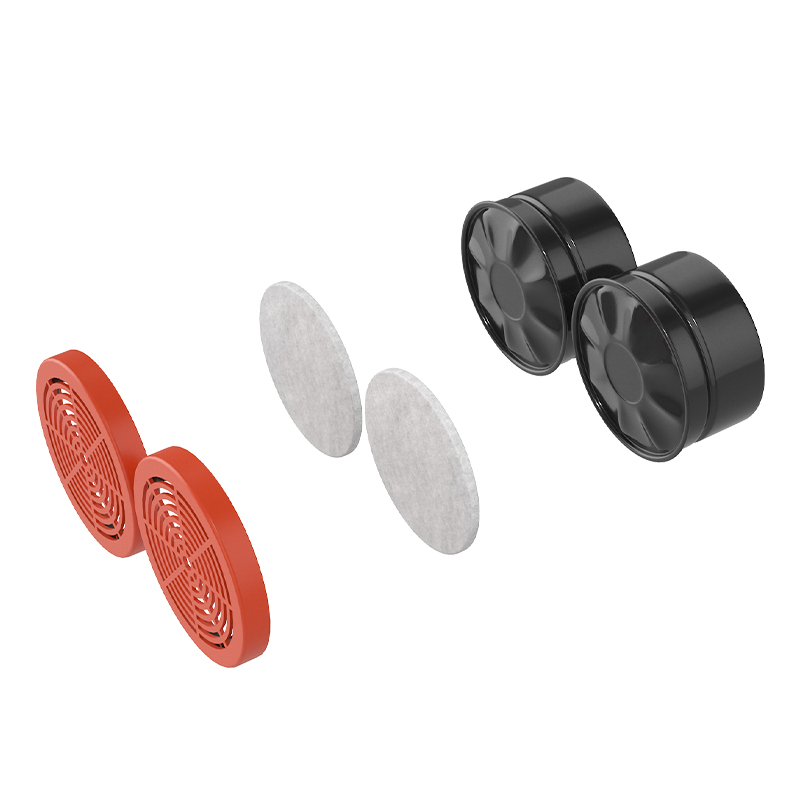
    Die Kernkomponenten von Gasmaskenbehältern variieren je nach Schutzziel (A/B/E/K-Serie) erheblich. Im Wesentlichen werden „spezifische Komponenten verwendet, um die chemischen Eigenschaften bestimmter Gase zu berücksichtigen“ – eine Präzision, die entscheidend ist, wenn diese Behälter mit Atemschutzgeräte mit Luftreinigung, die nicht passende oder unwirksame Filtermaterialien nicht kompensieren können. Im Folgenden finden Sie eine Erklärung entsprechend der zuvor erwähnten Gasartenklassifizierung mit Schwerpunkt auf der Relevanz für PAPR:​1. Für Serie A (Organische Gase/Dämpfe, zB Benzol, Benzin): Aktivkohle als Kern​Hauptbestandteil: Aktivkohle mit hoher spezifischer Oberfläche (meist Kokosnussschalenkohle oder Kohle auf Kohlebasis mit einer Porosität von über 90 %. Die Oberfläche von 1 Gramm Aktivkohle entspricht der eines Fußballfeldes).​Funktionsprinzip: Nutzt die „physikalische Adsorption“ von Aktivkohle – organische Gasmoleküle werden aufgrund der „Van-der-Waals-Kräfte“ in den Mikroporen der Aktivkohle adsorbiert und können nicht mit dem Luftstrom in die Atemzone gelangen. Dies macht es ideal für den Einsatz in PAPR-betriebene Luftreinigungsatemgeräte Wird bei Lackier- oder Lösungsmittelhandhabungsaufgaben eingesetzt, bei denen eine kontinuierliche Belastung mit organischen Dämpfen eine zuverlässige, lang anhaltende Adsorption erfordert.​Verbesserte Optimierung: Für organische Gase mit niedrigem Siedepunkt der Serie A3 (z. B. Methan, Propan, die extrem flüchtig sind) wird „imprägnierte Aktivkohle“ (mit geringen Mengen an Substanzen wie Silikon versetzt) ​​verwendet, um die Adsorptionskapazität für organische Gase mit kleinen Molekülen zu verbessern – entscheidend für Überdruck-Luftreinigungsatemgerät Wird in Ölraffinerien oder Erdgasverarbeitungsanlagen verwendet.​ 2. Für die Serie B (Anorganische Gase/Dämpfe, zB Chlor, Schwefeldioxid): Chemische Adsorbentien als Hauptkomponente​Hauptbestandteil: Imprägnierte Aktivkohle + Metalloxide (z. B. Kupfersulfat, Kaliumpermanganat, Calciumhydroxid).​Funktionsprinzip: Die meisten anorganischen Gase wirken stark oxidierend oder reizend und müssen durch „chemische Reaktionen“ in harmlose Substanzen umgewandelt werden. Zum Beispiel:​Chlor (Cl₂) reagiert mit Calciumhydroxid und bildet Calciumchlorid (ein harmloser Feststoff).​Schwefeldioxid (SO₂) wird durch Reaktion mit Kaliumpermanganat zu Sulfat oxidiert (das nach dem Auflösen in Wasser im Filtermaterial fixiert wird).​Diese chemische Stabilität ist ein Muss für Atemschutzgeräte mit Luftreinigungsfunktion, die in chemischen Produktionsanlagen eingesetzt werden, wo plötzliche Spitzen in der Konzentration anorganischer Gase eine schnelle und wirksame Neutralisierung erfordern.​3. Für Serie E (saure Gase/Dämpfe, zB Salzsäure, Fluorwasserstoff): Alkalische Neutralisatoren​Hauptbestandteil: Kaliumhydroxid (KOH), Natriumhydroxid (NaOH) oder Natriumcarbonat (auf Aktivkohle oder inerten Trägern).​Funktionsprinzip: Nutzt die „Säure-Base-Neutralisationsreaktion“, um saure Gase in Salze (harmlos und nichtflüchtig) umzuwandeln. Zum Beispiel:​Salzsäure (HCl) reagiert mit Kaliumhydroxid zu Kaliumchlorid (KCl) und Wasser;​Fluorwasserstoff (HF) reagiert mit Natriumhydroxid zu Natriumfluorid (NaF, ein Feststoff) und verhindert so, dass es die Atemwege ätzt.​Diese korrosionsbeständige Formel ist unerlässlich für Atemschutzgeräte mit Luftreinigungsfunktion, die in Beizwerkstätten oder bei der Halbleiterherstellung verwendet werden, wo säurehaltige Dämpfe sowohl eine Gesundheits- als auch eine Gerätegefahr darstellen.​4. Für Serie K (Ammoniak- und Amingase/-dämpfe, zB Ammoniak, Methylamin): Saure Adsorbentien​Hauptbestandteil: Mit Phosphorsäure (H₃PO₄) imprägnierte Aktivkohle oder Calciumsulfat.​Funktionsprinzip: Ammoniak und Amine sind alkalische Gase und werden durch „Säure-Base-Neutralisation“ fixiert. Zum Beispiel:​Ammoniak (NH₃) reagiert mit Phosphorsäure zu Ammoniumphosphat ((NH₄)₃PO₄, ein Feststoff);​Methylamin (CH₃NH₂) reagiert mit Calciumsulfat und bildet stabile Salze, die nicht mehr verflüchtigen.​Diese gezielte Neutralisierung ist der Schlüssel für Atemschutzgeräte mit Luftreinigungsfunktion, die in Düngemittelfabriken oder Kühlhäusern eingesetzt werden, wo Ammoniaklecks eine häufige Gefahr darstellen.​III. „Übereinstimmungslogik“ zwischen Struktur und Komponenten: Warum können Gasmaskenbehälter nicht gemischt werden?​Aus dem obigen Inhalt ist ersichtlich, dass die „Schichtstruktur“ und die „Komponentenauswahl“ von Gasmaskenbehältern vollständig auf das „Schutzziel“ ausgerichtet sind – ein Prinzip, das in Kombination mit Atemschutzgeräten mit Gebläseluftreinigung noch wichtiger ist, da diese Geräte sowohl die Wirksamkeit der richtigen Behälter als auch die Risiken der falschen Behälter verstärken:​Wenn eine Gasmaskenkartusche der Serie A (Aktivkohle) zum Schutz vor sauren Gasen der Serie E mit Atemschutzgeräten mit Gebläsereinigung verwendet wird, dringen die sauren Gase direkt in die Aktivkohle ein (es findet keine Neutralisationsreaktion statt) und der kontinuierliche Luftstrom des PAPR leitet diese ungefilterten Gase direkt an den Benutzer weiter.​Wenn eine Gasmaskenkartusche der Serie K (saures Adsorptionsmittel) in einem Atemschutzgerät mit Gebläseluftreinigung der Serie B (stark oxidierend) ausgesetzt wird, können unerwünschte Reaktionen auftreten und sogar giftige Substanzen entstehen – Substanzen, die das Gebläseluftreinigungsgerät dann in die Atemzone zirkulieren lässt.​Dies spiegelt auch die zuvor erwähnte „goldene Auswahlregel“ wider: Gasmaskenbehälter der entsprechenden Serie müssen entsprechend der Gasart in der Arbeitsumgebung ausgewählt werden, um sicherzustellen, dass die Struktur und die Komponenten ihre Funktion wirklich erfüllen, insbesondere bei der Integration in Atemschutzgeräte mit Gebläseluftreinigung.​Abschluss​Ein Gasmaskenbehälter ist kein „Einstoffbehälter“, sondern eine ausgeklügelte Kombination aus Schichtstruktur und gezielten Komponenten – eine, die perfekt auf die Verwendung mit Atemschutzgeräten mit Gebläseluftreinigung abgestimmt ist. Die Außenhülle dichtet den PAPR-Luftstrom ab, die Vorverarbeitungsschicht filtert Verunreinigungen, um die PAPR-Effizienz aufrechtzuerhalten, und die Adsorptions-/Neutralisationsschicht im Kern greift gezielt auf spezifische Gase ein, um die PAPR-Luft sauber zu halten. So wird der Schutzeffekt erreicht, „das Eindringen schädlicher Gase zu verhindern und saubere Luft austreten zu lassen“. Das Verständnis dieser Details hilft uns nicht nur bei der wissenschaftlich fundierten Auswahl von Gasmaskenbehältern für Standardmasken, sondern ist auch für Benutzer von Gebläse-Atemschutzgeräten von entscheidender Bedeutung, die sich auf die Kombination aus Behälter und PAPR für einen gleichbleibenden, zuverlässigen Schutz verlassen. Es ermöglicht uns auch, den Zeitpunkt des Behälterwechsels während des Gebrauchs besser einzuschätzen (z. B. lässt die Schutzwirkung stark nach, wenn die Adsorptionsschicht gesättigt ist) und bietet so eine zusätzliche Sicherheitsvorkehrung für die Atemschutzgeräte – insbesondere für diejenigen, die in Hochrisikoumgebungen auf Gebläse-Atemschutzgeräte angewiesen sind. Wenn Sie mehr erfahren möchten, klicken Sie bitte hier. www.newairsafety.com.
    MEHR LESEN

Eine Nachricht hinterlassen

Eine Nachricht hinterlassen
Wenn Sie an unseren Produkten interessiert sind und weitere Details wissen möchten, hinterlassen Sie hier eine Nachricht, wir werden Ihnen so schnell wie möglich antworten.
EINREICHEN
Kontaktieren Sie uns: sales@txhyfh.com

HEIM

PRODUKTE

WhatsApp

Kontaktieren Sie uns